

Open Water Safety: Dangers of open water
03.07.2026
Children’s Social Care in England 2026: What the Latest Ofsted Data Tells Us
25.08.2026
Free Guide: Practical Advice for Children’s Homes and Supported Accommodation Providers
For today’s young people, the digital world is where friendships are built, interests are explored, communities are discovered and identities begin to take shape.
It’s also where many of the challenges facing young people now emerge.
Concerns around harmful content, cyberbullying, online exploitation, unrealistic expectations and excessive screen time have grown steadily over recent years. In response, the UK Government has announced plans to strengthen online protections for children, alongside the ongoing implementation of the Online Safety Act, placing greater responsibility on technology companies to create safer online environments.
While the legislation is still being developed, providers can begin planning meaningful conversations with young people rather than simply reacting to future changes.
What has the Government announced?
The UK Government has announced plans to introduce legislation that would prevent children under the age of 16 from accessing major social media platforms, including TikTok, Instagram, Snapchat, Facebook, X (formerly Twitter) and YouTube, with the proposed restrictions expected to come into force in spring 2027, subject to Parliamentary approval.
Alongside this, the Government has outlined wider online safety measures, including stronger age verification, additional safeguards to reduce children’s exposure to harmful content, and increased accountability for technology companies.
These proposals build upon the Online Safety Act, which already requires online platforms to identify and reduce risks to children, with Ofcom responsible for regulating compliance.
How is it expected to work?
The proposals indicate that responsibility for enforcing age restrictions will primarily sit with social media companies.
Platforms are expected to introduce more robust age-assurance measures to prevent children under 16 from creating or accessing accounts where restrictions apply.
The Online Safety Act already gives Ofcom powers to regulate online services and require platforms to demonstrate how they are protecting children. The proposed restrictions are expected to build upon these existing responsibilities.
Importantly, children’s homes and Supported Accommodation providers are not expected to police social media on behalf of the Government.
Instead, providers will continue playing the role of helping young people understand online safety, build healthy habits and develop the judgement they’ll need throughout adulthood.
Supporting young people through change
Every young person will experience these changes differently. Some may welcome spending less time online or appreciate having fewer distractions. Others may feel frustrated, worried about missing out, or concerned about losing an important way of staying connected with friends.
As with so many aspects of supporting young people, the most valuable starting point is listening.
This can become an opportunity to discuss balance, wellbeing and independence. Helping young people reflect on how technology makes them feel, what they enjoy most online and what they value away from their devices encourages self-awareness that will benefit them long after they leave care.
Questions such as “What new skill would you love to learn?”, “What would you enjoy doing if you spent a little less time online?” or “What makes you feel most confident?” shift the conversation away from what young people might be losing and towards the opportunities they can gain.
Digital wellbeing is a life skill
Preparing young people for adulthood has always involved much more than practical independence. It’s about helping young people learn to budget, prepare meals, travel independently, build healthy relationships and develop skills for everyday life.
Increasingly, digital wellbeing belongs alongside those skills.
Learning how to question what they see online, recognise unhealthy influences, protect their own privacy, think critically about information and know when to ask for help are all capabilities that will continue to matter, regardless of which social media platforms exist in five or ten years’ time.
Importantly, the proposed restrictions do not remove the need for digital literacy. Young people will still grow up in a connected world where technology influences education, employment, relationships and everyday life. Helping them develop confidence, judgement and resilience online remains just as important as ever.
A positive opportunity for children’s services
While headlines often focus on restrictions, there is another way to look at these developments. They create an opportunity to strengthen the conversations we already have with young people.
Every discussion about screen time can become a conversation about balance.
Every conversation about online safety can become an opportunity to build critical thinking.
Every positive choice, whether that’s spending time outdoors, trying a new hobby or simply talking openly about something they’ve experienced online, helps build new skills and ultimately independence.
Download Our Free Guide
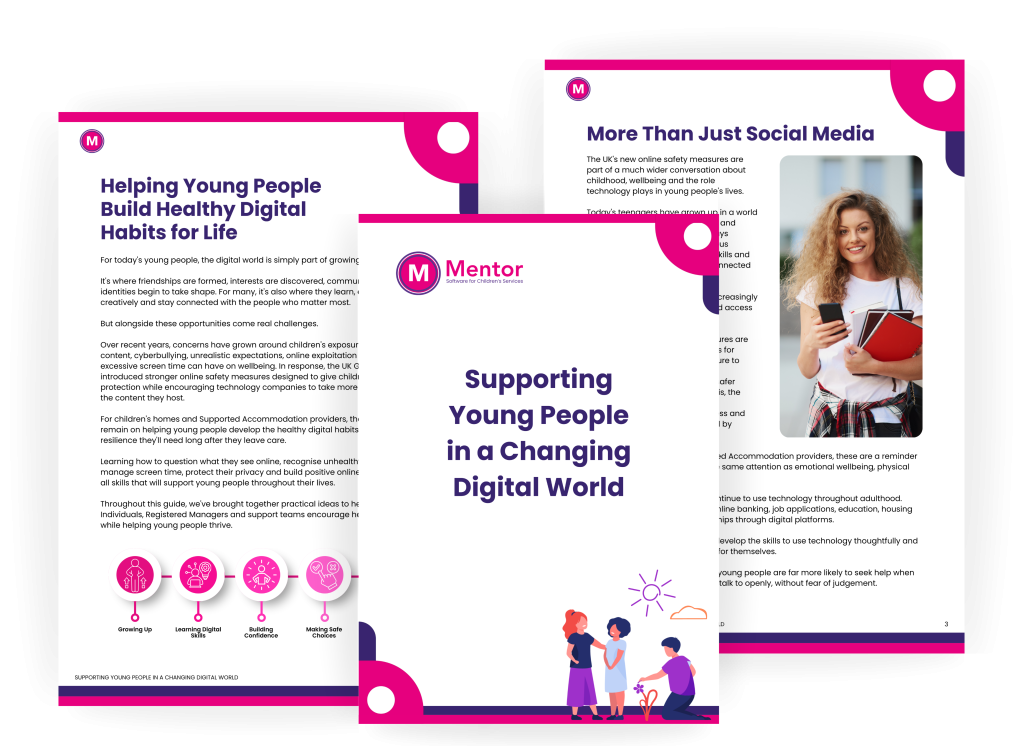
To help children’s homes and Supported Accommodation providers navigate these changes, we’ve created a practical resource designed specifically for professionals supporting young people every day.
Inside you’ll discover practical guidance on:
- Encouraging healthy digital habits
- Building skills beyond social media
- Turning change into positive opportunities
- Conversation starters that encourage reflection
- A simple framework for supporting long-term digital wellbeing
At Mentor, we believe technology should support better outcomes for young people, both inside and outside the home. That’s why, alongside our software, we regularly create free practical resources to help providers navigate change with confidence.