

Supporting Care Leavers to Develop Independent Living Skills
06.11.2026
What does being ready for independence really look like, and how can Children’s Homes and Supported Accommodation providers help young people feel prepared for what comes next?
More than a third of care leavers who contributed to Ofsted’s Ready or Not research felt they left care too early. Many described feeling unprepared for the everyday realities of adulthood, from managing household bills and finding somewhere safe to live to maintaining relationships and accessing support.
In our latest webinar, Ann-Marie Born, former Ofsted Inspector, revisited the findings of Ofsted’s Ready or Not research alongside the updated Local Care Leaver Offer guidance, effective from 30 September 2026.
The session explored what providers can learn from young people’s experiences, the support available to care leavers and the practical steps professionals can take to make the transition to independence more positive.
What Did Ofsted’s Ready or Not Research Reveal?
Ofsted’s Ready or Not: Care Leavers’ Views of Preparing to Leave Care, published in January 2022, highlighted significant differences in how young people experienced their transition from care.
Among the findings:
- More than a third of care leavers felt they left care too early.
- Only two fifths reported receiving help to understand which bills they needed to pay and when.
- Almost half of young people living in children’s homes immediately before leaving care felt they were not involved at all in decisions about their future.
- Around a quarter of care leavers rarely or never felt safe when they first left care.
- A third reported not knowing where to access help and support.
As explored during the webinar, preparing for independence requires much more than completing a pathway plan or arranging accommodation. It involves developing practical skills, building trusted relationships, understanding individual needs and giving young people a meaningful voice in their future.
1. Preparing for Independence Must Start Long Before Moving Day
One of the strongest messages from Ofsted’s research was how quickly some young people felt their transition happened.
Several described having limited time to prepare, with important decisions about housing and support taking place shortly before they were expected to move.
Rather than concentrating on the final weeks before a young person moves on, teams can create regular opportunities to practise skills, make decisions and build confidence over time.
This might include:
- Planning and preparing meals together.
- Shopping for groceries and comparing prices.
- Managing a weekly budget.
- Learning how to use household appliances.
- Attending appointments independently, with support where needed.
- Understanding tenancy responsibilities and household bills.
- Building confidence when travelling or accessing local services.
The key question for providers is: Are young people getting enough opportunities to practise these skills before they need to rely on them?
2. Financial Literacy Is About More Than Managing a Budget
Financial preparation was a recurring concern throughout Ofsted’s research.
Although many care leavers received help accessing benefits or funding to set up their homes, only two fifths reported being helped to work out which bills and payments they needed to make and when.
Some young people described receiving unexpected bills without understanding what they were, how to pay them or what might happen if they missed a payment.
The updated Local Care Leaver Offer guidance places greater emphasis on financial literacy and the support available to young people.
Providers must include information about financial literacy services and how eligible care leavers under 25 can access them.
This includes support with:
- Budgeting for rent, household bills and everyday expenses.
- Understanding payslips, tax and National Insurance.
- Opening and managing bank accounts.
- Recognising financial scams.
- Understanding credit scores, borrowing and debt.
- Accessing benefits and other entitlements.
- Building savings and planning for unexpected costs.
These everyday situations can provide a much clearer picture of readiness for independence than a completed checklist alone.
3. What Has Changed in the Local Care Leaver Offer Guidance for 2026?
The updated Local Care Leaver Offer guidance came into effect on 30th September 2026, providing further direction on how local authorities in England should consult on, publish and maintain their offers of support for care-experienced young people.
Under the Children and Social Work Act 2017, local authorities are required to publish a Local Offer explaining the support available to care leavers.
The updated guidance reflects changes introduced through the Children’s Wellbeing and Schools Act 2026 and should be read alongside existing leaving-care legislation.
The Local Offer should provide clear, accessible information about statutory entitlements and additional support available through local authorities and their partners.
This can include help with:
- Housing and setting up a home.
- Education, training and employment.
- Financial assistance and budgeting.
- Physical and emotional wellbeing.
- Relationships and community connections.
- Accessing advice and support as young people move into adulthood.
Making the Local Offer Accessible
One important aspect of the guidance is accessibility.
Local authorities should make their offers easy to find and understand, including on mobile devices and in formats suitable for young people with additional communication or accessibility needs.
Personal Advisers are expected to promote the Local Offer and help young people understand the services and entitlements available to them.
For Children’s Homes and Supported Accommodation providers, this creates an important opportunity to work closely with placing authorities.
Questions to consider:
- Does every eligible young person have access to their local authority’s Care Leaver Offer?
- Have staff discussed the available support with them?
- Can young people find and use the information independently?
- Are teams following up with placing authorities when information or support is missing?
The aim is to help young people make practical use of the support available, rather than simply providing them with another document.
4. Every Eligible Young Person Should Have Access to a Personal Adviser
Personal Advisers (PAs) play an important role in helping young people prepare for and navigate life after care.
The webinar highlighted the importance of introducing eligible young people to their PA from the age of 16, so relationships and transition planning can develop before they reach adulthood.
Yet Ofsted’s research found that more than a quarter of care leavers did not meet their PA until they were 18 or older.
For providers, practical actions include checking that eligible young people have been allocated a PA, supporting introductions and formally following up with the responsible local authority where arrangements are outstanding.
Early and consistent communication between professionals can make a significant difference to how supported a young person feels throughout their transition.
5. Young People Need a Genuine Say in Their Future
Ofsted found that almost half of the young people living in children’s homes immediately before leaving care felt they had no involvement in decisions about their future.
For some, this included decisions about where they would live, who they would live with and whether their accommodation would allow them to continue education or employment.
These decisions have real consequences. A placement far from college, work or trusted relationships can create additional financial and emotional challenges at an already significant point in a young person’s life.
Ask yourself:
- Has the young person had a meaningful say in where they will live?
- Do they understand the decisions being made?
- Have their concerns and preferences been recorded and considered?
- Have they had opportunities to visit or become familiar with their new accommodation?
- Do their plans reflect their education, employment and personal relationships?.
6. Feeling Safe and Supported After Leaving Care
Leaving care can bring a mixture of excitement, uncertainty and anxiety.
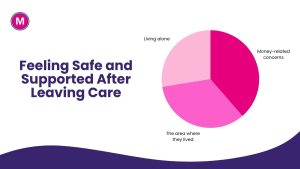
In Ofsted’s research, only around half of care leavers reported feeling safe always or most of the time when they first left care.
The most commonly reported reasons for feeling unsafe included:
- Money-related concerns: 49%
- The area where they lived: 43%
- Living alone: 35%
The webinar also explored Staying Close, an approach designed to strengthen relationships, networks and practical support for young people leaving residential care.
The updated guidance explains that local authorities should include Staying Close support within their Local Offer where it is available locally. A national duty is planned for 2028–2029, with rollout taking place in advance.
7. Relationships Should Continue Beyond Leaving Care
Some of the most powerful insights from Ofsted’s research concerned the relationships young people had developed with staff and other trusted adults.
Care leavers described the importance of knowing they could return to a familiar place, share a meal, celebrate a birthday or contact someone when they needed advice.
For many, these relationships provided reassurance and a sense of belonging. Sadly, others described feeling rejected when promises to stay in touch were not fulfilled.
During the webinar, Ann-Marie encouraged providers to think carefully about what ongoing relationships might look like in practice.
Can young people return to visit? Who will keep in contact? How will this be agreed and communicated?
8. Healthcare Support for Care Leavers
The announced measures include plans to extend access to free prescriptions, dental care and eye care up to the age of 25, alongside improvements to mental health support and access to NHS employment opportunities.
Providers should check the latest eligibility criteria and implementation arrangements before advising young people that specific services are available.
In the meantime, practical preparation can include helping young people register with a local GP, dentist and optician, understand how to access appointments and find appropriate mental health support.
These are essential aspects of developing confidence and navigating adulthood.
9. Small Changes Can Make a Lasting Difference
One of the most valuable messages from the webinar was that meaningful preparation often comes from the small things providers do consistently.
Helping a young person understand a household bill, involving them in a decision about their future or making sure they know who to contact when they need support can have a lasting impact.
As a starting point, providers can:
- Review how early independence preparation begins.
- Give young people more opportunities to practise everyday skills.
- Check Personal Adviser arrangements for eligible young people.
- Make the Local Care Leaver Offer accessible and meaningful.
- Involve young people in decisions about their accommodation and future.
- Plan how trusted relationships can continue after they leave.
- Review how progress, achievements and individual support needs are recorded.
The question Ann-Marie left us with is an important one: What will you do differently following this session?
Watch the Webinar: Ready or Not – Preparing Young People for Life After Care
If you missed the session, you can catch up with Marie’s discussion of Ofsted’s Ready or Not findings, the updated Local Care Leaver Offer guidance and the practical steps providers can take to improve young people’s experiences.
Explore More Free Care Leaver Resources
There are many organisations providing valuable advice, guidance and opportunities for care-experienced young people. To make these easier to find, we’ve started bringing together some of our favourite resources in one place.
Explore Our Free Care Leavers Resource Hub
You can also read our guide to supporting care leavers to develop independent living skills for further practical advice.
The Madlug Foundation: Moving with Dignity
Another initiative highlighted during the webinar was the Madlug Foundation.
Madlug works to support children and young people in care by providing suitable bags for their belongings when moving between placements or into independent living.
Through its buy-one-give-one model, every bag purchased helps provide a pack-away bag to a child in care.
This addresses an important issue raised in Ofsted’s research, where some care leavers described having to move their belongings in bin bags.
Providing a proper bag is a relatively simple gesture, but it can help ensure young people experience these transitions with greater dignity and respect.
Sources and Further Reading
- Ofsted – Ready or Not: Care Leavers’ Views of Preparing to Leave Care (2022)
- Department for Education – Care Leaver Local Offer Guidance (September 2026)
- Care Leaver Covenant
- Education support and social work: Care Step
- Review of early deaths of care leavers
- Employment and careers: NHS career opportunities, Premier Inn work experience and apprenticeships and Sky graduate programmes.
- Setting up a home: Discover IKEA’s support for care leavers.
- Managing money: Find out about Lloyds Banking Group’s bank account support.
- Learning to drive: Explore the AA Charitable Trust’s Theory Test App.